Welcome
Edward Tenner is an independent writer and speaker holding the titles of Distinguished Scholar in the Smithsonian's Lemelson Center for the Study of Invention and Innovation, and Visiting Scholar in the Rutgers University Department of History. He is the author of Our Own Devices and Why Things Bite Back. His new book, The Efficiency Paradox: What Big Data Can't Do, is published by Alfred A. Knopf and Vintage Books. In 2020-21 he is a visiting scholar in the Program in Interdiscipoinary Studies at the Institute for Advanced Study.
A biographical summary appears at the bottom of this column.
Important: Reconstruction of links. Dropbox, which hosts pdfs I've linked to this site, is disabling public links without converting them to its new system.I am uploading the files and creating new links in Google Drive, but this will take time. Meanwhile if any link (Dropbox or otherwise) is dead, please contact me using the Contact tab above. Please include header with subjects of links you would like to reduce chance request will go in my Spam folder. I regret the inconvenience..
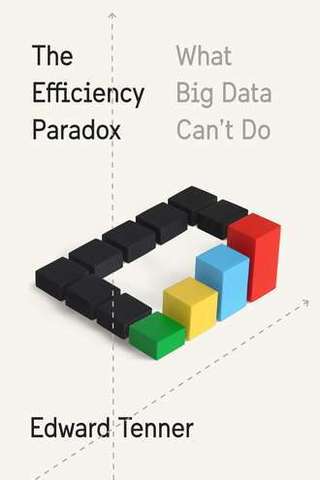
One of Bloomberg's Best Books of 2018
The Google IPO, the cloud, smartphones, big data, social media, unicorns -- we've had a second web revolution since 2005, not to mention a historic recession. Why are so many people in the United States and elsewhere still unhappy with the recovery? Much as I appreciate and use technological efficiency, I also believe in what I call inspired inefficiency, the right amount of intuition and creative error. The Efficiency Paradox explores the downside of a good thing -- and suggests remedies.
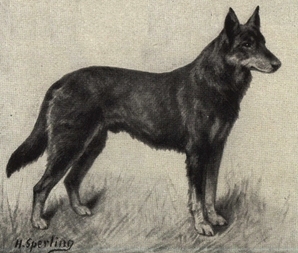
Constructing the German Shepherd Dog, Raritan Quarterly Review, Spring 2007
Coinciding with the victory of victory of the German Shepherd Dog Rumor at Westminster in 2017, my essay on the history of the breed was first given as an invited paper at Princeton, Caltech, Case Western, and Rensselaer Polytechnic 20 years ago. It my first publication in my original field of German history since I received my Ph.D. in 1972.
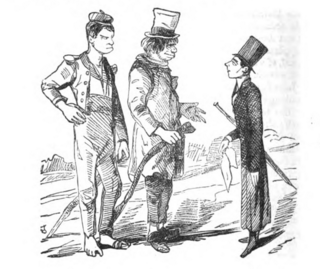
The nineteenth century's universal male headgear. A visual essay on the career of top hat from the eighteenth century to the present, originally published in Artenol, 2015.
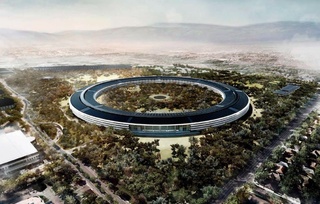
Coming Full Circle? Apple's monumental new headquarters is in the grand tradition of the free-standing suburban corporate research citadel. Will it be a new beginning for the company -- or is it a rearguard effort against the move of technology industries back to cities? I weigh the pros and cons at Bloomberg View.

The Future of Unintended Consequences
Revenge Effects revisited, from an interview in the forthcoming edition of Allianz Project M magazine.

The Informed Life
When does information overload us? People have been debating this for at least 150 years. Yet even in the 1960s, when the phrase "information abundance" was first commonly used, it wasn't so easy to access. In an invited essay in the University of Chicago Magazine, I suggest there are advantages in having grown up in the pre-Google era.
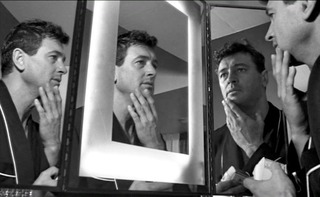
Be yourself. If that doesn't work, be somebody else.
That's what the middle-aged hero of John Frankenheimer's 1966 film Seconds tried, with unhappy results. Both dramatically and technically it's a neglected tour de force that especially rewards replaying with the commentary Frankenheimer recorded in the late 1990s. For example, he gave up his three-pack-a-day habit after he saw that the cinematographer James Wong Howe, already 60, could climb California hills that left Frankenheimer gasping for breath. Click on Rock Hudson's photo for my commentary on the Atlantic site.
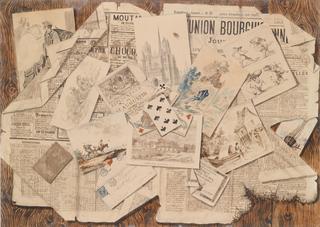
Rumors of Paper's Death Are Still Exaggerated
It may be less important than ever as a proportion of information and store of wealth -- but it's also even more essential. A 21st century sequel to my 1989 Harvard Magazine essay, "The Paradoxical Proliferation of Paper."
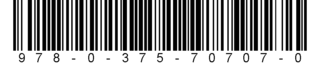
Raising the Bar?
The bar code has helped make and unmake corporations (especially Wal-Mart and Amazon) and business models -- but earned no fortune for its original inventor. What lessons can entrepreneurs draw? Taking off from my post on the invention on the Bloomberg View site, the business magazine Build suggests a few.
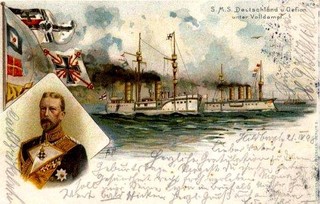
When Economic Nationalism Bit Back
One of the most notorious unintended consequences of protectionism helped end the post card boom in early twentieth-century America. A look back to the time when "Made in Germany" was changing from stigma to symbol of quality. From The American Magazine on line.
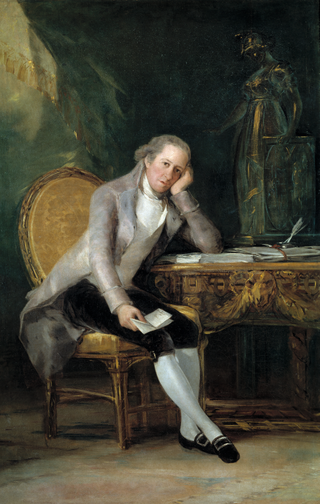
Writing as a Profession: Back to the Future?
Are new media killing the dream of professional writing or giving it a new life? There's evidence on both sides, but more than enough grounds for hope, in an essay in the Wilson Quarterly
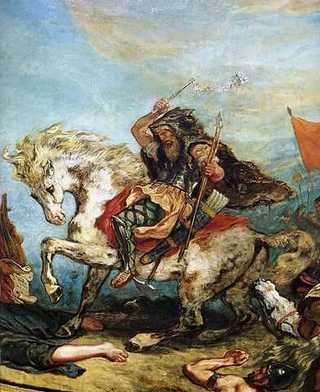
American Ruthlessness?
Ruthlessness remains taboo in most writing about success, sometimes despised but sometimes admired. And no nation has more complex feelings about ruthlessness than the United States. An 800-word look at American ruthlessness in theory and practice, from the New York Times Sunday review.
This is the web site of Edward Tenner, a historian of technology and culture, a visiting scholar at Rutgers University, Princeton University, and the Smithsonian's Lemelson Center, and a blogger at theatlantic.com
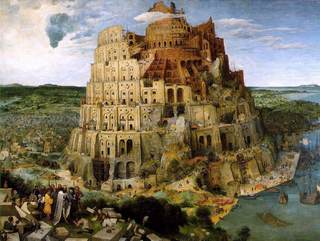
Building Big: Foolish, Except When It's Not
Independent public radio producer Julia Barton, pondering Russia's heritage of gigantism and preparations for the 2014 Winter Olympics, interviews Edward Tenner about the Xanadu Effect, for the radio program 99% Invisible.
More about the disasters and glories of big technology below.
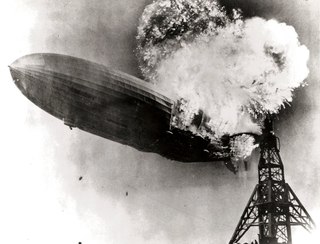
75 Years Ago: The Terrible Fate of the Depression's Concorde
The explosion aboard the Hindenburg on May 6, 1937 shocked the world, though even more passengers had died years a few years before in a now-forgotten British civil airship disaster. The biggest surprise about the event may be the existence of a very popular smoking lounge on the German zeppelin. An open pack of luxury cigarettes was featured in some of its advertisements, and fares were over twice the cost of first-class passage on the contemporary Normandie, the most magnificent ocean liner of all time.
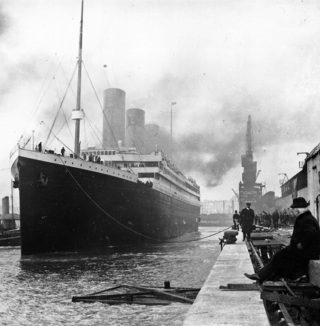
Thinking about the Unsinkable
The Titanic tragedy has stood for many things. But what really happened on the night of April 14-15, 1912? We need to study not only the history of technological risk, but the priorities and assumptions of captains, crew, and passengers alike before the terrible events. See Edward Tenner's thoughts in Popular Science, The American Magazine, and a Phi Beta Kappa Society webcast. There will be a lecture at the Henry Ford Museum on April 10, and in the Woodrow Wilson School at Princeton University at 4:30 PM on April 23.

An American Triumph Revisited
The Panama Canal and the Apollo Program were America's most celebrated twentieth century triumphs. What is the future of heroic technology? From NEH Humanities Magazine.
SeeThe Panama Canal on the American Experience, PBS, for reflections on the mentality of the Theodore Roosevelt era.
Photo: Wikimedia Commons
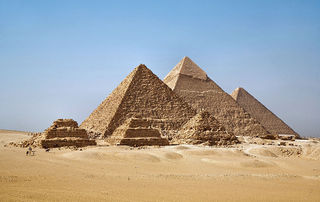
Virtually Immortal?
The Egyptians were among the first to make no little plans, especially for the long run. Today the Web promises a continuing presence of the human personality, perhaps even its reintegration with a preserved or reconstituted body. As part of a public humanities lecture series at the University of Pennsylvania in February 2011, Edward Tenner will explore America's spiritual affinity with ancient Egypt, and the story of the scientific quest for eternal life.
Photo: Ricardo Liberato via Wikimedia Commons
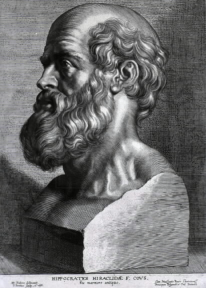
Unintended Consequences in Medicine
Robert Wachter,M.D. of the University of California San Francisco, a specialist in patient safety, interviews Edward Tenner for Morbidity and Mortality Rounds on the Web, U.S. Department of Health and Human Services.
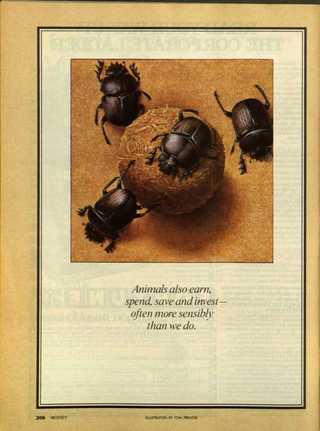
What Wall Street Can Learn from the Dung Beetle.
In 1985, Edward Tenner was an acquisition editor at Princeton University Press, where his list included a new monograph series in animal behavior and a successful bird field guide program. He was also writing for general-interest publications, including Moneymagazine. This essay originally appeared in May 1985.
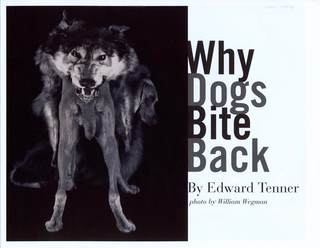
From the brief but illustrious life of the journal Oxymoron, vol. 2 (2000),"The Fringe," courtesy of the publisher.
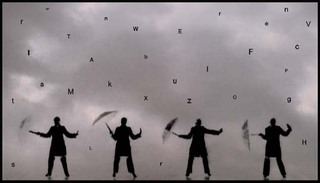
Lauren Mandilian's Information Overload, a multimedia M.F.A. thesis at Drexel University, was inspired in part by Why Things Bite Back. I had the honor and pleasure of attending the premiere. For a video of the brilliant performance, please click on the image to the left. -- ET
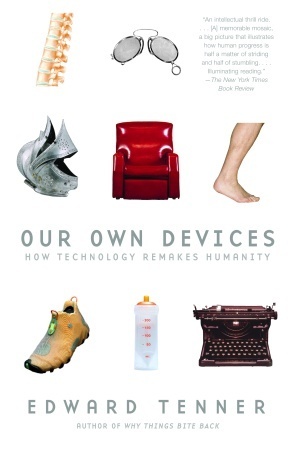
Publisher's Description
This delightful and instructive history of invention shows why National Public Radio dubbed Tenner “the philosopher of everyday technology.” Looking at how our inventions have impacted our world in ways we never intended or imagined, he shows that the things we create have a tendency to bounce back and change us.
The reclining chair, originally designed for brief, healthful relaxation, has become the very symbol of obesity. The helmet, invented for military purposes, has made possible new sports like mountain biking and rollerblading. The typewriter, created to make business run more smoothly, has resulted in wide-spread vision problems, which in turn have made people more reliant on another invention—eyeglasses. As he sheds light on the many ways inventions surprise and renew us, Tenner considers where technology will take us in the future, and what we can expect from the devices that we no longer seem able to live without.
Reviews and Advance Comments
"Within the discourse of the body, Tenner is Dr. Johnson, refuting Bishop Berkeley's solipsism by kicking a stone in the street. He is also an American original, a historian of technology with an unparalleled fund of knowledge about ordinary things--from baby bottles to Barcaloungers--and how they work (or do not work) in everyday life....Seldom has one encountered a more straightforward application of that much-misunderstood intellectual tradition known as American pragmatism. Tenner's method restores pragmatism's original meaning as an ethos rather than a doctrine, less a philosophy than a means of doing without one--a skepticism toward a priori assumptions, an openness to experiment, a willingness to evaluate ideas with respect to their consequences in everyday life. By reconstructing the pragmatic methods of inventors and designers, Tenner captures the dialectical interplay between body technology and body technique." -- Jackson Lears, The New Republic
"...as Tenner reveals, it is not at all obvious that a reliance on technology will be toxic to the meaning, purpose and dignity of human life. Nor has it always been the case that more technology has meant less contact with the 'natural' world. What is thought of as natural is always a product of human interaction with an environment that includes various technologies. They are continuously shaping us as we struggle to make them conform to our will. That ongoing tension may well be a key component in what creates meaning for human beings." -- Arthur L. Caplan, Nature Medicine
"Our Own Devices is even more insightful and provocative than Tenner's earlier book in illuminating how contemporary technology changes us as much as we change it. Tenner has become a worthy successor to such luminaries as business philosopher Peter Drucker, social critic Lewis Mumford and historian Lynn White in connecting technology's past, present and future." -- Howard Segal, Nature
"[A] memorable mosaic, a big picture that illustrates how human progress is half a matter of striding and half of stumbling. . . . [I]lluminating reading. After reading it, you can't help looking at ordinary objects around you -- or, indeed, on you -- and tipping your metaphorical hat to the scientific geniuses, seismic cultural shifts and accidental blunders that delivered them to you from across the centuries." -- David Pogue, N.Y. Times Book Review
"It is entirely to Tenner's credit that his narrative is so compelling, you realise only later just how much new learning he has afforded you. Required reading for anyone interested in the business of creativity." -- The Straits Times (Singapore)
"... a Balzacian historian. By 'Balzacian' I mean to suggest the obsessive intensity of that novelist's exploration of every aspect of every subject he pursues. Mr. Tenner writes with clarity, weaving his intricate, elaborate web of insights and discoveries finely enough to achieve the goal stated in the preface – that of finding new ways of looking at the commonplace." -- Stuart Mitchner, Town Topics, Princeton, N.J.
"If Henry Petroski is the engineer interpreter of everyday technology, Edward Tenner is its philosopher.... fascinating" -- Scientific American
"Tenner's erudite yet approachable style and his way with telling details keep his potentially obscure subject from becoming dry and boring, and those in search of a quirky but cerebral read will be delighted." -- Publishers Weekly
"[A] fascinating look at how devices we have created have affected our development..... Tenner's lively writing style (as well as the illustrations of early designs) and appreciation of the politics and economics that accompany scientific developments help put everyday technology in perspective." -- Vanessa Bush, Booklist
"...Tenner offers many profound insights into tech and product form and function. He devotes an entire chapter to global spread of flip-flops without once being boring." -- Chris Baker, Wired
"The lesson Tenner transmits so cogently, unpredictably, and delightfully is that in the best designs ease and complexity cohabit, furthering and reflecting evolution itself." -- Carlo Wolff, Christian Science Monitor
"In this stellar fusion of how we design and use technology, and how technology in turn transforms us, the simple shoestring is a . . . path to understanding everything that matters. . . . Tenner brings both scholarly precision and droll humor to his topics." -- Richard Di Dio, Philadelphia Inquirer
"[A] cautionary tale.... The only law that can be said with complete confidence to apply is the law of unforeseen consequences, the law so eloquently stated in the immortal formulation of Thomas "Fats" Waller: One never knows, do one?" -- Jonathan Yardley, Washington Post
"Edward Tenner's previous book, 'Why Things Bite Back: Technology and the Revenge of Unintended Consequences,' helped win him a cult-following throughout the world. Those who appreciated the author's wit and observations in the earlier book will appreciate his new effort." -- Larry Cox, Tucson Citizen
"Edward Tenner puts together knowledge compactly, like solving Rubik's cube. He knows so much and seems to have such fun divulging it."
--Alexander Theroux, author of The Primary Colors: Three Essays
"Before you buy anything else, buy Our Own Devices by Edward Tenner--with humor and insight, it demonstrates just how oddly a lot of 'can't-live-without' gadgets have affected our bodies."
--Bill McKibben, author Enough: Staying Human in an Engineered Age
"A fascinating look at how users of technology are constantly reinventing what is available to better suit their own purposes, thus not only remaking their technologies, but their bodies and lives as well. I consider this essential reading for anyone seeking to be a successful product developer."
--James Katz, Rutgers University, author of Machines That Become Us
About Edward Tenner
Edward Tenner is an independent writer, speaker, and consultant on technology and culture. His book Why Things Bite Back: Technology and the Revenge of Unintended Consequences has been an international bestseller. His most recent book is Our Own Devices: The Past and Future of Body Technology .
After receiving the A.B. from Princeton, a Junior Fellowship of the Harvard Society of Fellows, and the Ph.D. from the University of Chicago, Edward Tenner held teaching and research positions in Chicago and became science editor of Princeton University Press, publishing general interest books and launching competitive series in astrophysics, animal behavior, and earth sciences. Among the works he sponsored were Richard Feynman's last scientific book, QED: The Strange Theory of Light and Matter and The History and Geography of Human Genes by L. Luca Cavalli-Sforza, Paolo Menozzi, and Alberto Piazza, which began a new era of human genetics and received the 1994 R.R. Hawkins Award of the Professional and Scientific Division of the Association of American Publishers as the best scientific or professional book of the year.
Developing programs in the the history of science and technology, Edward Tenner became engaged with these fields and resumed a writing career that began when he was an undergraduate and contributor to the Daily Princetonian, the Tiger Magazine, and the Princeton Alumni Weekly. His essay on the differences among Harvard, Yale, and Princeton was published simultaneously by all three alumni magazines.
In 1991 Edward Tenner received a Guggenheim Fellowship and was appointed a visitor at the Institute for Advanced Study, where he began a project on unintended consequences of technology that was published as Why Things Bite Back. As a fellow of the Woodrow Wilson International Center for Scholars in 1995-96, he turned to the history of human interactions with everyday objects, which has led to Our Own Devices.
Edward Tenner is a Distinguished Scholar of the Jerome and Dorothy Lemelson Center for the Study of Invention and Innovation, National Museum of American History. He is also a visiting scholar of the History Department of Rutgers University and a Research Affiliate of the Center for Arts and Cultural Policy Studies of the Woodrow Wilson School, Princeton University. He has taught a course in the history of information as a visiting lecturer in the Princeton University Council of the Humanities and has also held visiting positions in the Princeton Departments of Geosciences and English, and in the University of Pennsylvania Department of the History and Sociology of Science. He is a member of the Board of Directors of the Copyright Clearance Center (CCC), a not-for-profit rights licensing organization and a member of the advisory board of the non-profit environmental group WeForest.
Edward Tenner has contributed essays and reviews to many of the leading newspapers and magazines of the U.S. and the U.K., including U.S. News, the Wilson Quarterly, Technology Review, Raritan Quarterly Review, American Heritage of Invention and Technology, Metropolis, the former Industry Standard, and Designer/ Builder. He has also contributed to the Web publications Microsoft Slate, and Forbes.com.
He has contributed essays on technology to the Atlantic and blogged for theatlantic.com, He he has also written frequently for the AEI's American Magazine online. These essays and posts are available by searching the respective sites.
He is a member of the editorial board of Raritan Quarterly Review and a contributing editor of the Wilson Quarterly.
He has spoken to meetings of many leading educational, corporate, government, and professional organizations, including Amherst, Caltech, Case Western, Drexel, Furman, Messiah College, University of Pennsylvania, Princeton, Rensselaer, St. John's (Santa Fe), University of Washington, Western Washington, and Yale; AT&T, IDEO, Intel, Microsoft, TED Conferences, Warburg Pincus Summit; Highlands Forum, In-Q-Tel, Library of Congress, National Institute of Occupational Safety and Health, National Summit on White Collar Crime, Smithsonian Associates, and the State Department Overseas Advisory Council ; and Aamerican Institute of Architects, American Library Association, American Society of Safety Engineers, NORWESCON (science fiction, Science Guest of Honor), and Society for the History of Technology.